Friday, July 27, 2012

The Best Batman Video Games

 The advent of The Dark Knight Rises calls for reflection on the the history of Batman -- video games. No doubt, there's been many of them across 20+ game consoles with many cash cows among them winners, losers and forgettables. But I'm not here to talk about Batman: Arkham City or anything on the Playstation, I'm talking about the past times of 8-to-16 bits, an age of Batman-rich merchandising and everything in between the Burton and the FOX animated cartoon. Before you kids of today listen to a silly-voiced Nolan-envisioned Bane, it's important to old-skool you in on the Batman games we old-timers grew up with.

There's no doubt there was a heap of licensed material released under the Batman brand since Burton reinvigorated the Batman name into the 90's with the movie and each game that followed it reached three or more consoles, each with alternate, varied results. Today, many developers conveniently just develop ports, homologizing them across the current-gen consoles. 

None of the games particularly break the mold in terms of originality and most were handled by Sunsoft, Konami or Sega (for the Sega consoles) and were either of the sidescrolling action-platform, driving or beat 'em up genres. 

Worry not, there's no Jokers in this deck as I've hand-picked Gotham's best.

Batman: The Video Game (Nintendo) / 1990

The first notable Batman game developed by Sunsoft modeled and licensed after the 1989 Burton movie. Batman was one of the grittiest games featuring and an excellent, progressive rock soundtrack as Batman hunts down The Joker through four not-too-difficult chapters inspired by locales in the movie. A simple game with some cutscenes, Batman's NES adventure is non-stop action, though lots of (platform) jumping,  wall-clinging and challenging boss fights. Though criticized for having a purple Batman, this game held true to the series' dark nature and solid game design even if it hadn't any Batmobile segments which became almost standard in later Batman games.


Sunsoft also released a Game Boy version with Batman sacrilegiously using a gun of sorts. Later released was also a Genesis version, which featured more rich graphics, colors, driving stages and a true black-palette Batman but arguably, this original version still wins, especially in the sound department with one of the best Nintendo soundtracks of all time.

Batman Returns (Super Nintendo) / 1993

During the 16-bit console wars, different licensing was almost always distributed to handle each version of the rival consoles. Konami secured the license for Super Nintendo while Sega in-house developed for their Genesis and Sega CD versions which resulted in three entirely different games. Needless to say, like most of the SNES  vs. Genesis wars, SNES usually won with not only quite possibly the best Batman Returns version but also the best Batman games produced, ever. And the game has it all: non-stop Final Fight (or in this case, TMNT-style) street brawl action through various chapters that were inspired by the movie. The action and animation are smooth as stealth, graphics at the peak of brilliance, and a mark of Konami quality reign throughout.


Like all of these action brawler types, gameplay gets stale and redundant rather quickly even if scenarios will often change to have Batman 'escaping' scenes with only his grappling gun and batarangs instead of fist-level action. Attention to detail is on point though, from the sprinkling snow in Stage one to the bosses, you know the development team did their homework for this game.

There was also a fairly forgotten NES version released months earlier which managed to get squeezed out in the phasing-out years of the aged 8-bit console, which plays out (and even looks and sound a lot) like an NES TMNT/Konami beat 'em up which is essentially a more crude version of the far, technically superior SNES one.

The rougher Genesis rendition, which stuck to platform action a la Sunsoft's Batman, made no attempt to copy this one. Now the CD one, had some of its own perks.

Batman Returns (Sega CD) / 1993
While not too memorable, like much of Sega CD's ill-fated library and history, Batman Returns on Sega CD needed to be much more for its technical, for lack of better verbiage, prowess which had the expectation of technically exceeding that of any other home console on the market. Paired with the use of digital media a la CD meant the audio capacity could blow any other game console out of the water beyond a chiptune soundtrack. The SCD version served as a grade-up to the Genesis version with mode-7 style driving action as well as the platform segments a la the Genesis version. But the real allure of the game was the soundtrack by U.S. Sega sound vet Spencer Nilsen, who used much higher quality, studio-grade synthesizers and even live recorded guitars in stages and cutscenes.

Still falling short of an overall more polished Super NES version, much thanks to its sound engine, which at times doesn't necessarily match the sprite-based game action scenes, makes it to the top of the heap while barely escaping the mediocre, albeit very challenging Genesis counterpart. If anything, the badass guitars in the game's theme song give it (certified 90's) credence alone. 


Side by Side: SEGA CD vs. Genesis Versions


The Adventures of Batman & Robin (Super Nintendo) / 1995

For those who watched Batman: The Animated Series (see: required viewing)the video game once of the same name chronicled players through the series across eight episodes featuring an array of Batman villains from The Joker to Two-Face to Man Bat for he and sometimes Robin to take on. When the producers decided to rebrand the series including Robin, the title changed, but the game stayed mostly true to FOX's acclaimed The Animated Series. Developed by Konami, gameplay reflected Batman Returns with milder Final Fight-style brawling but called upon players to recall upon some episodes and puzzles to complete each chapter.

Like the series, the animation is top-notch, graphics excellent, sound superb even if the gameplay is somewhat predictable, limited and linear with unlockables next-to-none. Adventures plays akin to interactive versions of the actual episodes from the series which allow playability of only Batman with an array of selectable weapons that will come in handy during each chapter. 

Just wait until you get to the Riddler's stage, which fleshes the best of two Riddler-themed episodes together into one wild ride. Only a couple chapters fall short and or deviate from the formulaic platform action; Catwoman's has you running up catwalks before a brief, easy fight and Two-Face's stage has you on a ho-hum top-down car chase through Gotham.

Sadly, this solo-only adventure had no battery back-up so you'll be relying on passwords to get back to each chapter.

Unlike the Sega produced, dramatically different two-player optional Genesis version, Konami's faithful reflection of the series doesn't rival the challenging, often impossible, but also noteworthy, darker Genesis version. There was also a Game Boy one which made it out long before the title change over.

The Adventures of Batman & Robin (Sega Genesis) / 1995
Sega's Adventures of Batman & Robin will play you like a harp from hell. Unlike the Super Nintendo version, Sega's version is a crack walk from the moment you turn on the game with a haunting, pounding electronic soundtrack by Jesper Kyd and gritty, dazzling visuals showcase. From baddies flinging their flashlights upon defeat to the checkered tablecloth whisping in Mad Hatter's stage, silky animation, fluid framerate and stunning effects crowned this game and pushed the Genesis to its fullest. By design, Adventures spiritually succeeds the gameplay of Return of the Joker (and might I add, the embarrassingly hideous Genesis version) though not nearly as weird, but with a reliance on projectiles instead of punches.
Unlike the SNES counterpart, the Genesis one has only four main villains: The Joker, Two Face and (Sega exclusive) Mad Hatter following Mr. Freeze's plot to freeze Gotham into an ice age. You play as Batman or Robin (or both, with two-players -- and you'll need it) though nether have any discernible differences, push through four enemy packed stages flinging colored projectiles at hoards of street ruffians, explosive dolls and ginormous mechanical cats.

Now, you can enjoy a play-through of the Super NES version or be on edge constantly with this rendition, crafted for the hardcore shooter enthusiast or those who made their way through the likes of Contra, Alien Soldier or Gunstar Heroes with diamond difficulty, perseverance and a demand for perfection. And the game calls for it. Nonstop throughout the game's lengthy, flashy four stages, you'll have to tough it without save files or passwords. Even though the gameplay is somewhat generic, the visuals and aspects callback to the demented nature of the series' stage bosses and themes. Unlike the SNES one referring to actual episodes, specifically The Mad Hatter's 3rd Stage "Tea Time" (use a code, you'll probably never make it through there), really should have won award for its masterpiece, the Genesis one models stages after the nature of villains. 

Seriously, this game's development team Clockwork Tortoise Inc. poured everything into this game. While I can't say I've made it too far past Stage 2 on my own merit, the design is appreciated even if the difficulty requires fierce skill.

Like Returns, Adventures of Batman & Robin also had a vastly different Sega CD version developed by the Genesis team with impressive, FMV animated cutscenes featuring voice cast from the show. While not offering much in the bat belt, the CD version plays out like a $60 interactive episode which forced lame, action-driving segments in bewteen the episodic highlights. A much watered down Game Gear one takes bits and pieces from the Genesis stage design but ultimately falters as a lukewarm underper(plat)former.

For Collector's Sake...
Batman titles don't generally score for too high prices but like many 20+ year old games, some unreasonable asking prices can be found on eBay and Amazon. While you can grab most anything on this list for affordable prices for incomplete or 'cart only' buys, the sought after complete ones in very good shape will have you spending around the cost of the MSRP.

For The Love of Batman...
Can't end this off without mentioning the biggest stinker of all Batman titles, namely the Sega Genesis port of Batman: Revenge of the Joker. Hell, even the technically inferior Nintendo version (entitled "Return of the Joker") beats this off-kilter, silly looking and slightly homoerotic blue Batman platform shooter. Unlike the NES version, which was handled by the masterful Sunsoft, another company commissioned by Sega handled what what supposed to be a remake ended up being a crude port with ugly, awkward and flamboyant character designs, lazy production and a flamboyant Joker. Largely based on the comic canon, Revenge of the Joker appears to garner inspiration from the hokey 1960's show which really only resonates in the Genesis one...


Wednesday, May 16, 2012

Anime Music Review: The Skull Man Original Soundtrack 1&2


Skull Man is an anime that most probably haven't seen. Based on a manga from the 1970's, the anime reprises and illustrates the aforementioned source material to future generations into a short-lived miniseries featured in 2007. When I saw Sagisu's name for music accreditation, I decided to seek out the soundtrack. Then I watched the anime. In that order. While a decent, yet, brief series, Skull Man's audio steals the show, far surpassing the anime. In fact, after hearing the two volumes released by Geneon, I realized most of the cuts didn't make the cut, or were abridged much to the dismay of an outstanding, lesser known soundtrack and work of Shiro Sagisu. 

For shame, the riffin' title opener "Hikari no Michi" by Tokio wasn't even included on these soundtracks.

Shiro Sagisu, whose known for this work with Neon Genesis Evangelion and BLEACH, employs everything he's known for: impressive production values, masterful composition, and sharp session players resulting in a memorable score. Beyond the packaging, Sagisu presents an array of music styles to help draw us into The Skull Man's cryptic, mysterious world.

Skull Man's focal audio objective is best described as neo- 'noir' mystery throughout. Like his darker works in this vein with the almost entirely synthesized Casshern and BLEACH TV Soundtracks 1 and 2, Skull Man encompasses and packages Sagisu's influences from those series but also his crowning achievement Neon Genesis Evangelion with the support of dreamy strings and violin leads in both London and Tokyo, trickling electric keyboards, casually bluesy guitars and slowly into a realm of his unrelated "Songbook" volumes, venturing into jazz.

Like the entirely French tracklist on the Rebuild of Evangelion releases, Skull Man follows suit here with more of the same dubious titles for each track accompanied by Japanese diction.

As per Sagisu gathering excellent session players for his works, he rounded up the best here, most of which have been used on other projects like Kare Kano, Evangelion and BLEACH. This is one tight rhythm section of jazz players at that: Osamu Koike (Tenor Saxophone), Shin Kazuhara and Eric Miyashiro (Trumpets), Makoto Kuriya (Piano and Fender Rhodes) and his recurring Shiro's Songbook sidemen Andrew Smith (E.Guitar) and Jerry Brown and Greg Lee (Bass). Each musician gets to show off their stuff on more than a few tracks and damn well at that.

Soundtrack 1 opens with a series of plush jazz that typically pairs sax-and-trumpet to give each track a backbone of horns. L'Echo D'Obscur and its detective agency sax and Miyashiro on mute trumpet lead, tip-toe bass leading into some of the series' best tracks Code Dérobe, which immediately lures in with beautiful Rhodes tickling the foreground of horns, stomping upright bass, piano and some strings backing. Each musician, Kazuhara on trumpet and Koike on the tenor sax each get solo time, edited in the series. 

Récit d'Exclusif is the early main theme of sorts of the investigative Hayato Mikogami with a chill, jazz-funk electric bass, Rhodes easily captures the mood of the original manga's 1970's era jazz with a given sound of funky bass, electric pianos and a masterful tenor sax lead. Enjoy the solos here too, as you didn't get to hear them in the anime.

Need to Chase and Une Ville De Complot show of more of Smith's cool guitar soloing, both falling right into the vein of a modern detective noir with sinister masks on each.

Skull Chase is classic jazz; snappy piano and thick upright bass with more trumpet and sax, solos for each or a piano version which features only the acoustics. Skull Action also has a jazz-centered piano rendition, where the original features a layer of strings accompaniment, both found on the second volume.

Much of the audio beyond the smooth jazz conveys the sour sense of relax in Skull Man's world with images of dancing with ghosts like the acoustic guitar and strings, waltz of Les Jours, Mes Amours and the Evangelion-inspired strings of Pour Mieux Vivre and accompanied piano solos. Vers Mon Pays sounds like a grandfather clock melody before a keyboard-led into a bed of luscious strings.

La Lutte Contre La Douleur and L'Elegie heard in many scenes recurring featuring  signature Sagisu arranged strings and a solo trumpet.

Soundtrack 2 are mostly 'B' tracks; they might have been able to throw them on the first with this disc resulting in filler. Instead, the inclusion of some (must-have) follow-up tracks that play in the direction of the first volume are here with the disc ending in a series of said forgettable, filler bumpers.

Start To Check Up is more  70's jazz-funk and fusion, with some bossy, marching electric bass and drum, growling guitars and some outstanding sax by Koike, Smith with some shimmering Rhodes to carry a disc favorite while Touch The Fuse! follows suit with a more peppy tempo and firey trumpet.

Filler or not, background Par Ténèbres sets a garish mood with cryptic Rhodes, spider-like double bass, trippy synthesizers and spastic, acidic violin that echoes the obscure and foghorns in Par Ténèbres II.

Smith shines again on Underground, which was nowhere to be heard in the anime; best described as a heavy-metal jazz jam session with fierce drumming, grunge and adlib solos in the dark spotlight.

Skull Man has one vocal, a wonderful French piece by lyricist Meri Neeser in a lounge-jazz style Nos Rêves d'Enfants with Osamu Koike complimenting the sultry female vocals with smooth saxophone and solos.

If there were any reason to buy a soundtrack, it's to fully appreciate the aural soundscape that accompanies the film. Even a year later, both discs are as fresh as when I first enjoyed them. For me, it's the handful of jazz-fusion easily enjoyable outside the show and immersive orchestral pieces that too live very well outside the anime. A real shame Skull Man isn't more well recognized even with Sagisu's name attached as it's one of his most solid, memorable works since the Evangelion days.

Both are must-haves, especially since most of the best tracks are minimally represented in show and deserve more attention that can be carefully digested outside the series. With volume two releasing six months later, it's too bad these discs never reprinted as a double set so you'll be tracking both down and steering clear of those (cheap) eBay fakes. 


SHUFFLER'S SCORES : 

Original Soundtrack 1 : 9.5 (A)


Original Soundtrack 2 : 9.0 (A-)

More Audio Samples from Soundtrack 1 on CDJapan


------------------------------------------------
The Skull Man Original Soundtrack 1
GNCA-1140 


01 L'Invitation à Noir 
02 Skull Action
03 L'Echo de l'Obscur
04 Récit d'Exclusif
05 Une Ville de Complot
06 Les Jours, Mes Amours
07 Code Dérobé
08 Vers Mon Pays
09 Un Suspect de Lune
10 Par Ténèbres
11 C'est Une Sacrée Saleté de Vicieuse
12 Sous La Pluie
13 Need To Chase
14 Poésie et Prière
15 Skull Chase
16 Silhouette d'Affaire
17 Nos Rêves d'Enfants
18 L'Elégie
19 Dans La Bourrasque
20 Boléro Noir
21 Promotion Video Theme
22 CM Bumper (A)

23 CM Bumper (B)

The Skull Man Original Soundtrack 2
GNCA-1158

01 L'Invitation à Noir (Short Version)
02 Touch The Fuse!
03 Start To Check Up
04 Le Plus Bel Endroit du Monde
05 Le Grand Frisson
06 Skull Chase (Piano Version)
07 Par Ténèbres II
08 Underground
09 La Lutte Contre La Douleur
10 Pour Mieux Vivre
11 Skull Action (Piano Version)
12 Les Chemins du Destin
13 Dernière Rhapsodie 

14 Impact, Destin Noir
15 La Dernière Bataille
16 Nos Rêves d'Enfants (Instrumental)
17 CM Bumper (C)
18 CM Bumper (D)
19 CM Bumper (E)
20 CM Bumper (F)
21 CM Bumper (G)


Thursday, May 10, 2012

Game Music Review "Monster Hunter Swing ~Big Band Jazz Arrange~"

All that matters is saxophones. 

And If you like them, you can't help liking Zac Zinger's one-man big band with some help from his friends on Monster Hunter Swing ~Big Band Jazz Arrange~.

From the adorably illustrated cover I'd love to have as a poster print, it's a swingin' disc that could have been more swank.  

Monster Hunter is a series that has seen a flow of cash cow merchandising that Westerners don't see over the snowcapped mountains of Japan's shores. Unlike the louder Capcom franchises like Resident Evil or Mega Man, Monster Hunter churns out mad in its native land not quite mirroring that level of appeal in the US with its games crowding bargain bins of discounters and disgraced GameSlops

More so, The series has captured a great deal of musical attention in the past couple years with an array of arranged genres from Orgel to Orchestral so it was just a matter of time before more pop-western stylings would emerge to sound better on your portable music devices. Thus, Big Band and a forthcoming Guitar album will be coming to your speakers soon.

Not having much experience with the Monster Hunter series, I jump (and jive) at any jazz-tinged arrange that the industry will allow even if it's buried deep within a forested maze of acoustics and strings that is the heavenly Sekaiju no MeiQ (Etrian Odyssey) arrange discography.

Capcom's label Suleputer isn't known for producing arranges in great numbers but typically has had a good stream of multi-disc soundtracks and boxsets over budgets for arrange projects but has been chancing it lately with Monster Hunter. Having built a foundation as a fledgling series with iterations and additions as a Capcom goldleader would be expected to (Arcade Edition, Plus, SUPER, et. al), it's clear that this series will spawn more such albums in coming years. 

Off the bat, they sent Monster Hunter Swing out West to lauded, accomplished young Berkeley alum Zac Zinger, with whom I had the honor of seeing perform live with the Berkeley College's Shota Nakama and his triumphant 90-pc. Video Game Orchestra a few years back, playing the soprano sax on Akira Yamaoka's Laura's Theme.

The multitalent Zinger put Swing together over a four-month stint, practically handling all the core duties, primarily playing alto and soprano saxophones and some tenor and baritone and is also an accomplished flute, carinet and EWI (Electric Wind Instrument) player. On the surface.

To my big surprise, the big band is not much of a big band at all but instead Mr. Zinger impressively sequencing most of the instrumentals including piano, upright bass, drum programs and additional keyboard work to synthesize the cutesy orchestra portrayed on the jacket. Royal scam or not and as befuddled was I on a few tracks throughout multiple listening sessions here I was thinking I was hearing a live brass solos likely dealt by his trusty EWI, which escapes any mention in the album's slim-to-no liner credits. While it's not a live band setting, the sound was produced with a top-notch tone where seconds in you'll doubt there was no band in on this album's ten cuts. The synthesized trombone solo on Sparking Blue Light ~ Jin'ouga is almost real if not for the crackle and treble blowing its cover.


Still, there's no mistaking its gamey sound which helps keep the origin intact in places with off-octave phony big band backings on some tracks, which works well and not so much on others. Impressively, the piano, bass and even some of the brass solos sound superb and as live as the saxes but were likely this way to stretch the allotted budget for the album.

Not without some help, there's a small list of additional Boston-area musicians for polish.
While most tracks fit within the realm of big band, Zinger fuses other jazz stylings like funk with the (80's) electric bass backings and solos on Bracchidios, beautifully fitting fretless bass solo on Secret Hot Springs and the aforementioned attitude of electric guitars on Cat Scat Fever, the latin piano and percussion on Tremble of the Sea and Land / Lagiacrus the cinematic opener A Proven Hero and smooth jazz with flute and soprano sax and brush drums on Searching for Secret Hot Springs and Pokke Village Theme with a plush, inviting alto sax lead.

His limited orchestra of pro performers include a solo here and there from fellow Boston-area friends including a guitar, trumpet and a electric bassist on the funky, groovy Scat Cat Fever, a baritone sax soloist on the disc's final track, some of the sound atypically finds its way in any big band your Brylcreemed grandpops' gramophone and records.

The selections are considered series standards, most of which are found on other Monster Hunter arrange discs or reprisals on the over 20 Monster Hunter releases with one making an arrange debut one the ninth track Brave Icon ~ Bracchidos from 3G.

It's not easy to pick a favorite here. Not because there are so many but because the album, while proficient as its arranger Zinger, seem to blend into a streaming similarity soup of synthesized audio, a tad overmixed with a thick of multilayered GarageBandesque of live saxophones, soloists and sequencing madness. 

Still, I can't help but to appreciate the fun Zinger had creating Scat Cat Fever from the bevy of wind and brass solos from start, peppering throughout and even the hollowing cat samples to fit and set apart from the rest of the tracks. Could have used more of these, including the album's other star Rob O'Block, laying down some fine bluesy chops, adding just the desired touch and distinction of jazz-fusion flavor.

I've wanted to see many things over the last couple years and have been let down in the face of Capcom's allowance of arrange albums including We Are ROCK-MEN! which exploded out the door with it's few fierce rock arranges but ultimately underwhelmed though not to the capacity of the 20th Anniversary Arrange let-downs. I wanted to like Big Band Jazz Arrange more but ultimately couldn't help feeling this one left half-hearted like We Are ROCK-MEN.

Though it's not exactly the level of polish expected (maybe too much polish, actually) and the overall sound of a tinny mock orchestra mar the seriousness of the album, there's much to love on this disc to be had for anyone craving some jazz and swing with a little more and a series of excellent saxophone solos in every track and performance by the exuberantly talented, young Zinger. Capcom's directors did not misstep outsourcing this project to a what is sure to be the profile of an up-and-coming winds player, composer, arranger and director I'd like to hear more of game and otherwise.


SHUFFLER'S SCORE: 7.0 (C-) 

-------------------------------------------------------------
Monster Hunter Swing ~Big Band Jazz Arrange~
CPCA-10258
 
1. Proof of A Hero
2. Sparkling Blue Light / Jin'ouga
3. Empress of Flame / Lunastra & Teostra
4. Pokke Village Theme
5. Dance of The Snow Village
6. Scat Cat Fever
7. Searching for the Secret Hot Spring 
8. Tremble of the Sea and Land / Lagiacrus
9. Brave Icon ~ Bracchidios
10. Hunter, Go Forth 
 
 
Music Samples Heard Here

Monday, July 5, 2010

Game Music Review "SILENT SCOPE TRILOGY Original Soundtrack"

While there's some fine stuff to be searched out, even fans of Jimmy Weckl might find his Silent Scope saga to be lightweight compared to his other contributions in the realm of Konami.

Konami's Silent Scope series is best remembered as a prime arcade experience enjoyed by many on the last stages of arcade thrill, at least in the U.S.. Silent Scope armed players with a life-sized sniper rifle with built-in screen mounted in front of a cabinet ready to shoot down rows of terrorists and other eccentric bad guys named Scorpion (and just wait until you get a load of the game's final boss). The game was just right; never too serious, B-movie Hollywood fare complete with epic save-the-world moments with silliness abound and action-heavy (sniping in stadiums, highways and even floating from parachutes!) -- just right for the zaniness of arcade action.

Like most arcade game soundtracks, they go unheard and unnoticed among the cacophony of the arcade jungle (at least in Japan). Furthermore, I always wondered if sound designers ever considered this aspect influenced the overall quality of sound design since most arcade soundtracks don't feature complex a la live or instrument-heavy musics more common with home-based games. Well, the Silent Scope series might be one of those games to fall through the cracks with many audibly, but luckily someone over at Konami's record label sought it to be a good idea to receive a two-disc trilogy of music.

Silent Scope Trilogy features music from all three arcade Silent Scope titles on two satisfying discs; Silent Scope on the first, Dark Silhouette: Silent Scope 2 and "Sogeki" on the second disc."So," what? That's "Sogeki," or "Sniper" more commonly known as "Silent Scope EX" in the U.S. or "Silent Scope 3" (later retitled when released to home consoles). Musically, the games have similarities throughout sans the final game with a mix of musical styles, mainly keyboard-heavy and manipulated tunes often venturing into Hollywood-style action flick with touches of jazz in a la composer and one-man band Jimmy Weckl's own signatures of jazz thrown into the otherwise heap of forgettable tunes.

Jimmy Weckl, stage name for the more commonly known Harumi Ueko (Weckl = play on Ueko?) who adapted many arcade game soundtracks onto the Super Famicom (including Goemon and TMNT: Turtles In Time) later becoming a Bemani Guitarfreaks/Drummania regular contributor across that series bazillion volumes and iterations as the fusion-jazz centric, multi-talented composer and arranger. Playing mainly piano and keyboards, saxophones and guitar, Weckl plays a range of other instruments, too, including brass (which he plays and mixes tandem/ one-man brass sections) often applied to his eclectic musical styles of rock, jazz, funk and occasionally some handsome, spiky backing horns.

The album begins with "Supreme", a lengthy, jazzy "series image score" of, oddly enough, no particular track from Silent Scope but a perfect blend of not only Weckl's stylings and signature sounds but the overtone imposed throughout the first and second Silent Scopes. Ever changing, jazzy and energetic with a piano and keyboard-solo led piece backed with an array of busy drums and percussions with tandem spikes of brass for added touch. The entirety of Silent Scope's sound mimicks this jazzy outfit and whether you like it or not, works well for the game in almost a spy-themed outing.

If only the bulk of the album mirrored this track, Silent Scope could've had a more interesting and memorable soundtrack beyond a few highlights scattered across the discs. Sadly, most of the tracks (the first) Silent Scope are keyboard and program-heavy mirroring a generic Hollywood soundtrack with a slutty saxophone on "Peeping Tom" (music played when focused on a scantilly clad lady), bass-and-percussions with a jazzy keyboard solo on "Search and Destroy" and even some heart-pounding, edgy orchestral work for the infiltration of the final mission "Menace of Darkness".

Weckl does incorporate his own one-man brass section complete with trumpets (regular and mute -- and you'll hear a lot of backing mute trumpets within), trombones and saxophones he's well-known for supplying on a good number of his Guitarfreaks tracks). These, are undoubtedly the better of the tracks found here if often sounding underdeveloped and short albeit true to his energetic, hyper packing of sounds within a few hot minutes. OK, there may be less of that here compared to his Bemani works, but the shadow of it is still evident.

One of the finest tunes remembered from the game is "Deadly Invitation", reprised on here as a seven-minute (double-looped) chilling, edgey orchestral piece that gains momentum, often feeding off strings and some sinister brass accompaniment nicely as you scale the dark hallways, peering through your nightvision scope.

Perhaps one of the most comical pieces of overdrama, "Er Halt Unds Beide" attempts some grandiose, choir trading the inaudible chanting with sharp brasslines and militaristic pounding of drums. You gotta love this one.

Silent Scope 2 moves on to target less of that jazzy influence, moving towards more of a dramatic and varied audio presentation. Dropping much of jazz overtone, apart from the superb opening stage "Fateful Encounter" which lured me into buying this set many years back, Silent Scope 2 goes for more a cafeteria-variety with more thematic musics for the accompanied stages.

"Fateful Encounter" ought to be this game's best offering; beginning with a pounding of tolling bells, a trickle of piano and jazzy cymbals against a sinister howl of evil voices and epic encounter over The London Bridge is, too, a memorable opening stage in the game, accompanied by this ideal track.

Sadly, the rest of the soundtrack falters from here not without some impressive, Hollywood-style melodrama throughout. Weckl provides more malevolent, choir-backed "Dark Silhouette" on the thunderous, dark middle-earth looking stage, an uneasy strings-led operahouse tune "Deadly Playhouse" and even some male operatic vocal for the boss "Devil of Opera".

One of my only gripes about the Silent Scope 2 soundtrack is two things. One, they included these radio-commentary briefing introductions seemingly ripped from the game's opening missions on a few of the tracks -- that go on for an entire minute or so before the soundtrack kicks in. It does this on the "Blizzard" track, so you might want to get that audio editing software queued up. Speaking of the audio on this game sounds a tad fuzzy, compressed -- even the clarity and production of the first game seems to have taken a drop.

Per usual, a few of the auxiliary tunes like the trumpet-and-trombone-heavy "Name Entry" and "Bulls Eye 2001" retain that rich horns-backed jazz sound that Weckl is known for and also stamped in the original. Even the bonus modes contain more chill music than the game's faux orchestral fare.

I guess nobody liked Silent Scope's music up until now which probed Weckl's third outing on "Sogeki" to throw it all away and replace it with a more ginchy electronic and techno-driven (no, heavy) soundtrack which ends up being very noisy and forgettable rather quickly. In spite of this, Sogeki actually has some surprises albeit very few; "The Fly" is reminiscent of a Guitarfreaks or Drummania track with some intense hyper keyboard-and-drumming action along with the soothing "Let's Go Home", beginning with zapping effects segway into a haunting jazz-fusion ending theme were Weckl (finally) busts out his tenor sax for a fine sun-setting etude for the game's "good ending" -- only wish he could've extended this one past a minute and a half. I even dig the new "Bulls Eye 2001" track, a remix of the former "2000" edition done up with some extra funky keyboardmania and thrashing electric drums. But that's it, I'll pass on the rest of this mess.

The only drawbacks with his release are the lack of the (dumbed-down) Playstation 2 soundtrack for Silent Scope 2, which could've help complete the set. The lack of more arrange or extended tracks like the first disc's "Supreme" would've been as kind on a third disc as well. Overall, while promising in patches, Weckl could have aimed higher.

SHUFFLER'S SCORE: 6.5 (D)


Monday, November 9, 2009

Phantom "Leon's Bomber Jacket" Update


Remember this story we did earlier this year about Japanese military clothier and accessorizer Phantom producing an almost true replica of that iconic bomber jacket warn by Leon S. Kennedy in Biohazard 4 (Resident Evil 4)?

In late 2008, Phantom produced a shadow of replication of Leon's Bomber Jacket, a much sought after short-lived item of apparel warn by protagonist Leon S. Kennedy of Biohazard 4. In our aforementioned story, we urged the company to produce more of the reservation-only jacket shortly after the remaining supply had vanished from e-Capcom, Capcom's official web-only merchandiser of often exclusive and rare items based on their myriad video game franchises.

It appears the powers that be have listened to eager fans willing to burst open their wallets because producer Phantom will be making another wave of Leon's Bomber Jacket this year.

As the site exclaims, the jacket will be open for reservations within in the same frame of last year's model; sizes Medium, Large and X-Large, each priced at 26,040 yen ($289). According to Phantom, the jacket will be available to ship sometime in December, so if you want one (overseas fans, keep reading), you had better get that credit card ready.

Because Phantom will likely not cater to overseas patronage, those interested will have to contact a middleman, or just get in touch with your familiar local import retailer (try NCSX) who has connections in Japan to further make financial and logistical arrangements. Be forewarned, the costs may exceed $400 for such services.

The jacket, more or less a modified B-3 bomber jacket with more forgiving synthetic leather with faux-shearling weathered to handle harsh conditions (unlike real leather), cut to fit more like Leon's than a typical B-3 with the trimmings, buckles (which are leather) and such. Since, we've uncovered a much better, officially-commissioned, ultra-rare replica made by (obscure) Korean company Johnny-Hill (which I paid out the nose for!). Needless to say, we will be purchasing the sought-after Phantom version for our collection.

Recently, one of the very few actual seen Phantom products has appeared on Japan's equivalent U.S. eBay auction circuit, Yahoo Japan Auctions back in late October. Remarkably, that one sold for roughly 82,000 yen (a whopping $911, at the time I'm writing this). I wonder if the buyer knew of the reproduction...

As suspected, the jacket shown in the company's model pictures versus the actual product is very true. We still think the cut and color, which seems to be cut too far below the waist and too black than brown looking are less than true to the actual jacket seen in production and in-game shots, but it's still a cool collector item and distinctive jacket to have. Below are more images we've collected of the item sold on various auction sites in Japan.


From the words of that creepy merchant, "Heh, heh, heh thank you!"

Friday, July 31, 2009

Game Music Reviews "Rockman 1~6 20th Anniversary Arrange Ver."

Oh, Rockman 1~6 20th Anniversary Rock, Techno Arrange Ver.: you could've been so much more: vision, execution and value.


Ever since the early 1990s, I like many others in my now early 20s age range, in my childhood grew up playing Mega Man games. Not just playing them, living (live role playing, yes I did it), playing outside the game (had the Bandai show-based action figures), watching (the U.S. TV series) and humming the music outside the game since before there was even an internet to distribute line-in rips of each track. Delving deeper into the wonderland of game music arrangement seeking, never found was a full-blown arrangement treatment done to the original Nintendo/Famicom series. Sure, it took some indie bands and later doujin covers to do a few tracks here and there, but nothing grand.

Now Rockman X received an outstanding jazz-fusion arrange in 1994, but the original series was limited to keyboard-frenzied mixes done by mainly by Alph-Lyla (Capcom's in-house sound team moniker). The closest we ever got was the fun remixes included in the "Complete Works", but they skimped and swiss-cheesed on the first three in the series.

Wanting more, I had always imaged hearing the catchy, melodic 8-bit tunes done up in something of an eclectic live musical foray -- which is why my jaw was on the floor when TEAM Entertainment released early bits on two arrange albums for the 20th Anniversary of the blue bomber.

To commemorate Rockman's 20th Anniversary, Capcom commissioned two albums be made to celebrate a decade or so of wondeful Rockman music (considered by myself as some of the greatest video game music ever composed) with a Rock Arrange Ver. and a Techno Arrange Ver. Thinking the Rock Ver. might follow in the mighty path of the recently released Wild Arms Rocking Heart, the results were of high expectation -- and the result was not of that same ilk.

In fact, dare I say whom ever commissioned these albums should be shamed -- I want a do over.

It's not to say both albums are terrible. In fact, they're decent -- but the expectation of waiting far too many silent years for a quality musical treatment will have to wait even longer for a true arranged musical tribute. Instead of gathering up a team of the industry's greatest, the Rock Arrange Ver. was given to Tohru Iwao, a heavy-rock guitarist known for his work on a couple Guilty Gear games but mainly Valkyrie Profile while the Techno Arrange Ver. was given to techno and sampling king, Shinji Hosoe who needs no such introduction.

After learning of the arranger choices, I believed these were golden from the start (well, at least with Hosoe). For Iwao, I had thought he won a raffle or something. Having not really heard of him, it was expected having anything to do with Guilty Gear would qualify for doing a rock-centered remix album. However, this selection as a guitarist of such a shallow resume in front of a line of the myriad brillant guitarists to be chosen is beyond me. Not to say one with a shallow history can't do great works -- Nittoku Inoue certainly surprised us all on Wild Arms Rocking Heart.

Either way, a mystery it shall remain.

Let us begin with the Rock Arrange Ver.

I don't know what happened here. Call it an uninspired couple of weeks in the studio, a lacking budget or a dubious director in charge of the playlists on both albums -- the burden to undertake Rockman music is something of a colossus. What's here is highly disappointing, steming right from the production. Skimpy, non-creative arranges and a short, oddly picked track list leaves too much more to be desired here begging further question. And why not two discs? If we're covering 1~6, why only ten tracks spanning the entire series?

The musician breakdown was another blow -- a simple "quartet" Tohru Iwao (guitar), Atsushi Hasegawa (Bass), Okky (Who? Drum *programming* -- not even live drums!), Masao Nakano (Keyboards/Programming). There's no guest artists, no eclecticism or surprises (truth be told, I was hoping for a sax or trumpet inclusion), and the guitar solos are slouchy in spaces. Did I mention those drums aren't even live? Not to dis Mr. Iwao, but these are lethargic and a giant slap to the face of the composers who worked legend to create the legendary Rockman sound tracks.

Putting aside the juggernaut disdain for the lackluster production of the album, that doesn't go without the tracks being engaging and ultimately salvagable though the material here never quite lifts off and results in being dry, often flat. They're all listenable, even if you try to block out what could've been. Actually, Dr. Wily 1 (Rockman 2) mix is pretty mean; exactly the amount of slobbering guitar meat I'd expect minus the extra polish and steam found on other superb guitar-centric albums like the aforementioned Wild Arms Rocking Heart, Konami Dracula & Shooting Battles, SEGAROCKS, Metal Slug 5, Shin Sangokumusou (Dynasty Warriors series, but specifically 3 & 4) and F-ZERO X Guitar Arrange Edition.

Each game receives a good two tracks (for the most part), which includes the Boss Mix medley, and well-performed at that (my blood starts to go when original Rockman comes on halfway through) even if they burned my ears by using Rockman 2's lame battle as the foundation here. The melody idea should've carried seeing the team only sought to pick ten tracks, but the "mix" at the end of each track will mislead a bit. Upon intial listen, I was hoping for "mix" to suggest inklings of other themes thrown in for good, well, mix.

And for gosh-darn-darn, who thought Get a Weapon (Rockman 3) should get its own of the sacred ten? A good track, but hearing three plus minutes of an originally under-minute tune to do nothing terribly special in that time is unacceptable.

Yamatoman mix
was done with a native Japanese twist, Shadowman mix sounds off-beat at the chorus, Cutman mix is decent but don't know why Tomahawkman mix had to be here -- perhaps to get something in there that diversifies with a Western sound a bit? Not hearing trumpets here is just wrong. Dr. Cossack 2 mix was good on the Complete Works iteration, but is just ho-hum here. Most of the tracks pace too slowly, even ones intended to be slower, like Dr. Wily (Rockman 5) mix doesn't have the intensity, so I found it hard to really rock out to these arranges.

The disc rounds up the list with ten bonus tracks -- but don't get too excited. They're all the original 8-bit versions of ones arranged here. You can have them all on Suleputer's now-I-can-finally-die-in-peace three-disc complete boxset of the original tunes released back in 2003.

Shortly after, Techno Arrange Ver. reared itself.

Here's a brilliant composer whose career and diversity in arranging talent was built upon the vast Namco sound history including the hyper-sampled Ridge Racer, later the fusion-edged Street Fighter EX series and simply far too many games to mention and his work with the first six Rockman titles' is nothing short of painful mediocrity. Did you hear Rockman EXE Transmission (Mega Man Network Transmission)? I thought that might influence him here a bit -- a smooth electronica. Nothing of it here. Instead, the techno used on the album is more of his classic, foundation material -- not bad, but not satisfactory by any means.

Still, Hosoe exhibits his mastery in the field of techno -- though not to the best of his abilities here. The tracklist is what it is -- like the Rock Arrange, Hosoe likely chose a bunch of tunes that would be ideal for a techno arrange -- and he chose well. Again, there's too much material left aside, and the creativity train has no steam. Though my musical umbrella is spacious enough for a plethora of genres, these are tried and true techno mixes -- like the rock ones, you won't find any surprises here.

Though I know Dr. Wily 1 (Rockman 2) is a sensation across the world (a BA song, yes, appearently, they're nuts for it in Japan too), I'll take the rock version over this raver edition. Snakeman might take you back to racing 170 kph on a the highways of a Rave Racer, especially with the voice samplings. Quickman takes a while to warm up, Magnetman is just too slow and Dr. Wily 2 (Rockman 4) misses out. Starman can't help feeling off-sound, which disappointed the most after expecting something as funky as the aforementioned Complete Works version. And poor Rockman 6, again for the shaft. Who picked this? Flameman? Oof.

Oh, and they put Dr. Wi -- I mean "Mr. X". Aside from the contrast to the Rock Ver. cover, there's no such Mr. X Stage Arrange here.

We're glad Rockman got some official recognition for its 20th on the arranged music front, but both albums had high standards to live up to -- and both have failed to meet them. Both albums were handled like late-term projects, feeling rushed, soulless and underproduced. To reiterate, both are not horrible, but the lackluster production values halt both albums tremendously.

But there's still time to pull out all the (guitar) strings for the forthcoming 25th...

-----------------------------------

SHUFFLER'S SCORES:


ROCK ARRANGE VER. : 5.5

TECHNO ARRANGE VER. : 4.0

All scores are graded on a scale of 1~10 (1 / Worst, 10 / Best).

Here samples on YouTube, Buy Them at CDJapan or Play-Asia.

Thursday, July 23, 2009

Game Music Review "Gunstar Heroes"

NON & Nazo² Unit's collaborative Gunstar Heroes arrangement has a constance of catchy melodies, superbly-peppered with instrumental solos and downright funky, bouncy space-vibed dance beats faithful to the original sounds


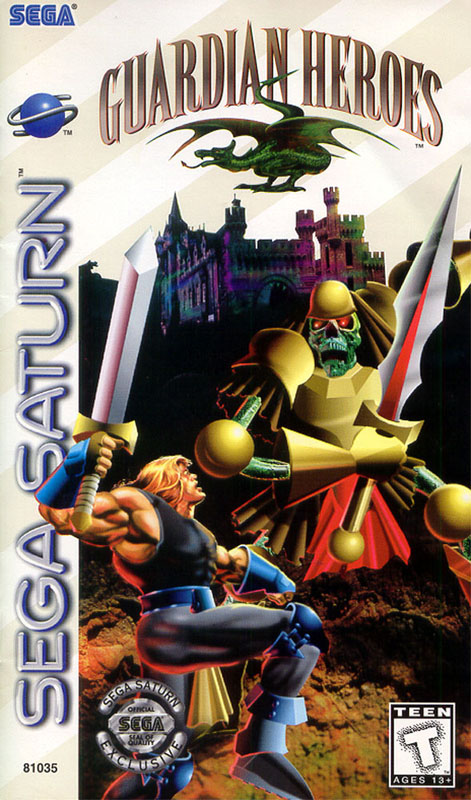
My history of video gaming is fruited. I grew up in what I consider to be the golden age, or the 1990's. But even in such a time of rich exploration for gaming combined with advances in technology, I've realized now that I missed out on some of what are considered by enthusiasts as Treasures. We're talking about the company "Treasure", responsible for many of today's rarer, more sought after, steep-difficulty curved titles in the shooter genre. Just a handful of their titles include "Guardian Heroes", "Radiant Silvergun" -- all of which either didn't reach the North American shores or were marred by their limited print runs due to their SEGA-only formats (mainly, the ill-received Sega Saturn in the West).

Gunstar Heroes, released for the Sega Mega Drive in late 1993 around that same time made its way over to the Sega Genesis shortly after. We'll spare the usual hideous U.S. box art commentary to pale in comparison to the superior native version for this album evaluation (and if you think that's bad, go compare Guardian Heroes: U.S. and Japan).

A few months later, Pioneer Records released an album for Gunstar Heroes. Like many game music releases in Japan, the vague cover art doesn't suggest the music on the disc is actually "arranged" (for those unaware, "arranged" music is typically reworked as to remix, extend for the purpose of utilizing broader musical capacity or genre that may or may not have been limited by the original hardware) and not the original game's soundtrack. Luckilly, the team commissioned to perform the album with staple Treasure composer Norio Hanzawa (known as "NON"), a well-known in-house group led by Jun Irie, Hideki Matsutake and the phantom guitarist Nazo² Suzuki called the "Nazo² Unit", whose done composition work for Treasure (see: Dynamite Headdy, Alien Soldier, Silhouette Mirage).

Nazo² Unit, just another variant of a more commonly known "Nazo² Project" under Konami and its "Perfect Selection" releases in the early 90's and before that "Akihabara Electric Circus" under various Nintendo releases. "Nazo²" has also appeared on countless other works, mainly for Konami and even Falcom, nevertheless employs a signature electronic-funk fusion sound. And, if you can forgive them for their infamous' Dracula "rap" album (to which I'm a proud owner of), you'll be glad to hear of their vocal-free Gunstar Heroes effort.

Irie (Keyboards) and Matsutake (Synthesizer) know how to arrange; they've been doing it since the early 80s under their group "Logic System." The results are, as usual, nothing short of excellent with arranges that never stray too far from the material. Over the course of the 90's, they've carved a signature sound for themselves that makes them rise above other arrange groups.

If you don't know the original soundtrack well, you'll be oriented to enjoy it anyway because of its constance of catchy melodies, superbly-peppered instrumental solos and downright funky dance beats making it faithful but also supplemental to the original works.

To go along with the theme, those who've heard Nazo² works will known of their well-stocked bevy of always impressive guest musicians who spice-up various tracks against Irie and Matsutake's funky-electronic sound. Following with the trend, this one's no slouch with the frequency of such musicians as Masato Honda (A. Sax, S. Sax), Ken Shima (Keyboards) and Willie Nakao (Guitars) -- with some of those names who've appeared on their previous Konami works.

NON & Nazo² Unit have selected 12 tracks to arrange (though opening and endings are on the shorter side), the ten on here are heavy on the bass and satisfying. Whether it be my long-time favorite "Last Party on the Moon" with Nazo² Suzuki's signature cool guitar riffs against bouncy beats or "Dice-Dance-Days" with Masato Honda belting out a series of fantastic, tight alto sax solos, the album has steam from start to finish. Other favorites include "Military on the Max Power" and "Stairs to High" which has their synthesizer sound in-tact against. Honda later appears on "End of Our World" with a slower, nasaly soprano sax effort and a taste of the group's chilled-out diversity.

Gunstar Heroes is a successful effort; faithful to the original music and co-existing with a happy medium to make it a solid arrange album. While this one has always been a lesser preferred Nazo² works to, say, mainly because this album leans more dance-funk across the board with less musical diversity than their superb Konami discography. Still, it stands up there as a classic, having been apart of my digital library for many years now. Though long out-of-print, and pricey to obtain on the used market, there's no exception as to why anything by Treasure is a sought after Treasure.

SHUFFLER'S SCORE: 8.0 (B-)

----------------------------------
Gunstar Heroes
PICA-2001

01 Legend of the Gunstars
02 Empire~The Final Assault~
03 "Good Night, Baby!"
04 Theme of Seven-Force
05 Dice-Dance-Days
06 The End of the Battle ~to our world~
07 Dancing~Smash~Hero
08 Military on the Max-Power
09
Stairs to High
10
Last Party on the Moon
11 Rolling chaser
12 Heroes~reprise for Yellow

Cover Image Courtesy: VGMdb (submitted by Kewing Darksun)